IB Programme
29 September 2026 2026-10-05 17:03IB Programme
 IB Diploma Programme · Grades 11–12
Think deeply. Go further.
The IB Diploma Programme at Candor is a challenging, internationally recognised pathway that develops knowledgeable, reflective and principled young people—ready for university and prepared to contribute to the world.
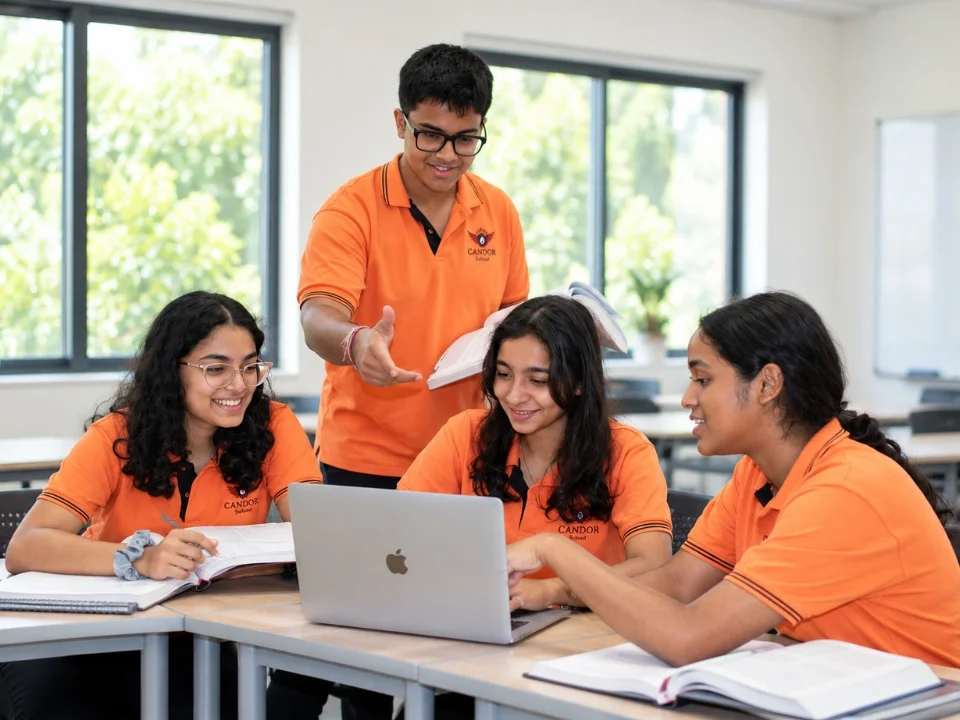
Ambitious by design.Human at its heart.
Designed for students aged 16–19, the Diploma Programme combines academic depth with breadth across languages, humanities, sciences, mathematics and the arts.
At Candor, students study six subjects—three at Higher Level and three at Standard Level—alongside the Diploma Programme core. This balanced structure keeps future pathways open while allowing students to pursue areas of particular interest in greater depth.
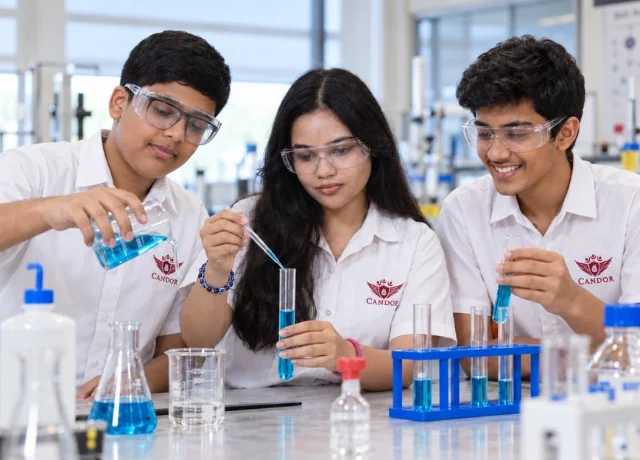
Question
Move beyond accepting information to examine evidence, assumptions and different ways of knowing.
Connect
See relationships across disciplines and consider issues from local, global and intercultural perspectives.
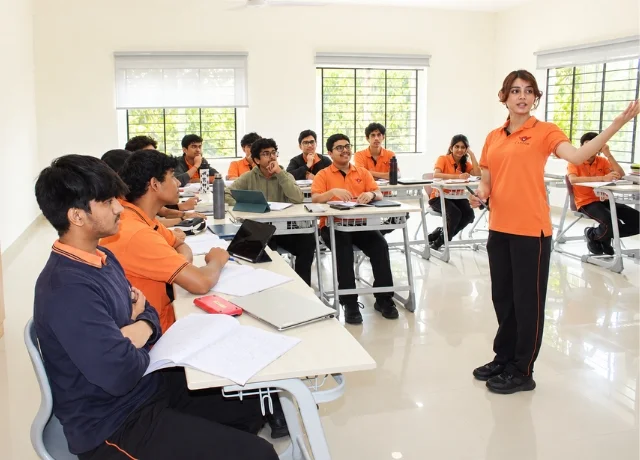
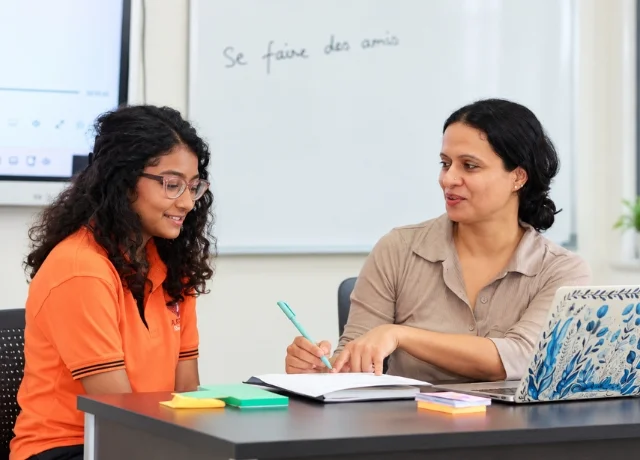
Contribute
Turn learning into meaningful action through creativity, activity, service and community engagement.
Three experiences. One connected education.
The core broadens the educational experience and challenges students to apply their knowledge, skills and values beyond individual subjects.
- TOK
Theory of Knowledge
Students question how knowledge is produced, evaluated and shared, making connections across their subjects and perspectives.
- EE
Extended Essay
Students undertake independent research and produce an academic essay focused on a question connected to one of their DP subjects.
- CAS
Creativity, Activity, Service
Experiences beyond the classroom help students develop initiative, balance, collaboration and a sustained commitment to meaningful action.
Build a programme around your future.
Students choose a balanced combination from six subject groups. An arts subject may be replaced by an additional language, individuals and societies, or science subject, subject to IB requirements and Candor’s timetable.
Studies in Language and Literature
Develop sophisticated reading, writing, analysis and communication.
- English A: Language and Literature — SL/HL
Language Acquisition
Begin a new language and develop intercultural understanding.
- Spanish ab initio/Spanish B — SL
- French ab initio/French B — SL
- German ab initio — SL
- Hindi B — SL
Individuals and Societies
Examine human behaviour, societies, systems and global change.
- Business Management — SL/HL
- Economics — SL/HL
- Digital Society — SL/HL
- Psychology — SL/HL
- History — SL/HL
- Environmental Systems and Societies — SL/HL*
Sciences
Investigate the natural and designed world through evidence and enquiry.
- Biology — SL/HL
- Chemistry — SL/HL
- Physics — SL/HL
- Computer Science — SL/HL
- Design Technology — SL/HL
- Sports, Exercise and Health Science — SL/HL
- Environmental Systems and Societies — SL/HL*
Mathematics
Select the mathematical pathway that best matches your strengths and goals.
- Analysis and Approaches — SL/HL
- Applications and Interpretation — SL/HL
The Arts
Develop creative practice, critical thinking and an individual artistic voice.
- Visual Arts — SL/HL
- Theatre — SL/HL
- Music — SL/HL
*Environmental Systems and Societies is interdisciplinary and can meet requirements across sciences and individuals and societies. Course availability and combinations depend on demand, staffing, prerequisites and the timetable; families should confirm current options with the school.
The right balance of breadth and depth.
HL and SL courses are assessed against the same grade descriptors, but differ in scope. Higher Level demands a greater body of knowledge, understanding and skill.
Higher Level
Approximately 240 teaching hours, allowing sustained depth and specialisation.
Standard Level
Approximately 150 teaching hours, maintaining rigour within a broader programme.
Show what you know. Demonstrate what you can do.
IB assessment measures knowledge and understanding alongside advanced academic skills: analysing information, constructing arguments and solving problems creatively.
External assessment
Most courses include final examinations assessed externally by the IB. Tasks can include essays, structured problems, data responses, oral responses and case studies.
Internal assessment
Students also complete subject-specific work such as oral presentations, laboratory investigations, mathematical explorations and artistic performances. Teacher marking is externally moderated where required.
Criterion-related results
Each subject is graded from 1 to 7 against established standards, not against the performance of other students. TOK and the Extended Essay can contribute up to three additional points.
The IB Diploma
The maximum score is 45. The diploma normally requires at least 24 points, satisfactory completion of the IB’s other minimum conditions.
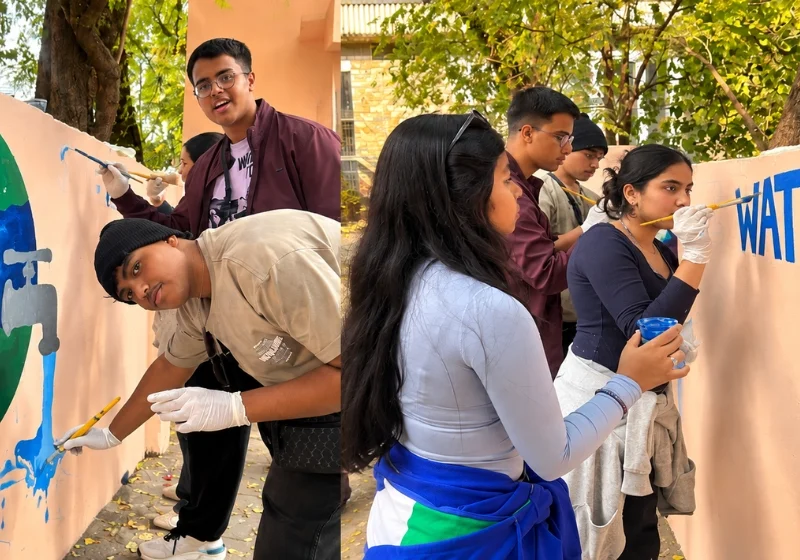
Learning grounded in real experience.
Candor’s diverse international community creates daily opportunities for intercultural learning and collaboration. Our green campus and organic farm provide authentic contexts for environmental science, independent research and CAS experiences.
- International community
- Organic farm
- Community service
- Experienced DP teachers
- Boarding available
A qualification recognised around the world.
Leading universities value the Diploma Programme for its academic rigour, breadth and development of research, critical thinking, communication and time-management skills.
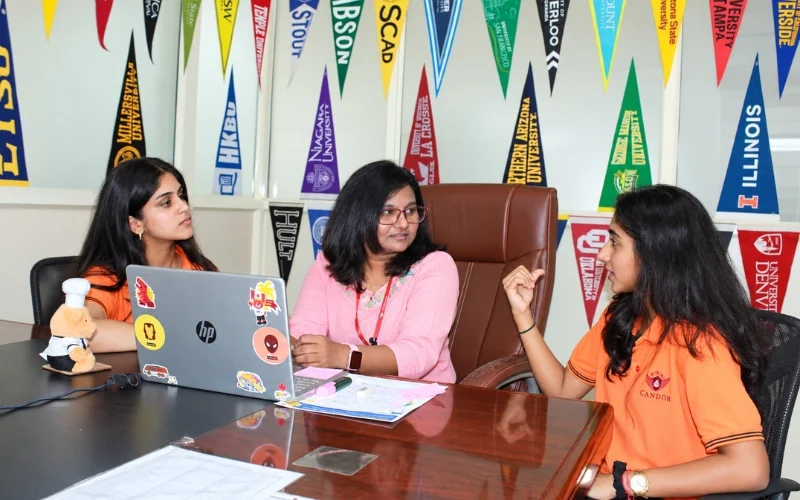
At Candor, college counselling works with students and families to explore options, make informed subject choices and navigate university applications. SAT and Pre-SAT guidance further supports students considering relevant international academic pathways.
Choice with purpose.
IB Primary Years Programme
Inquiry, agency and strong foundations
Cambridge Lower Secondary
Depth, independence and discovery
Cambridge IGCSE
Choice, rigour and recognised qualifications
IB Diploma Programme
Breadth, depth and global preparation for university
What families want to know.
How many subjects does a full Diploma student take?
At Candor, full Diploma students take six subjects: three at Higher Level and three at Standard Level, together with TOK, the Extended Essay and CAS.
How should students choose their subjects?
Choices should reflect a student’s interests, strengths, prerequisites and likely university pathway. Our academic and college counselling teams help families build a suitable combination.
Is the programme only for exceptionally academic students?
The DP is demanding, but success also depends on organisation, perseverance, curiosity and willingness to act on feedback. Admissions considers whether the programme is an appropriate pathway for each student.
How will families know how students are progressing?
Teachers use ongoing assessment, feedback and reporting to identify strengths, gaps and next steps. Students and parents should have a clear picture of progress before final examinations.
Begin your IB journey at Candor.
Meet our team, discuss subject choices and discover how the Diploma Programme can prepare your child for university and life beyond school.