Early Years
18 November 2026 2026-11-18 11:41Early Years
Early Years · Pre-K to K2
Where curiosity begins.
A safe, playful and stimulating start to school life—where young children learn through relationships, conversation, movement, creativity and hands-on exploration.
The Candor Early Years experience
Growing in every way.
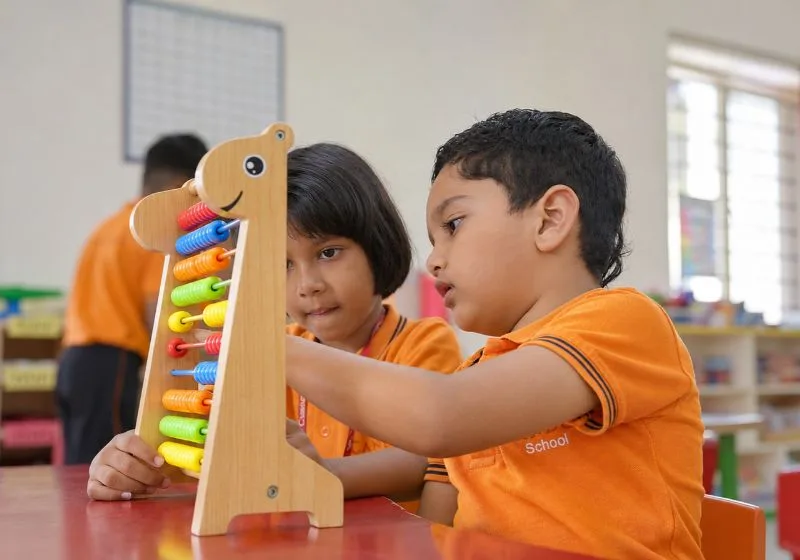
The first years of school shape how children feel about learning for a long time afterwards. At Candor, children learn through play, conversation and hands-on exploration. Teachers notice what each child is curious about and build learning around those questions.
We see every child as a capable, curious learner with ideas worth listening to. Children make choices, share their thinking, take manageable risks, try again and celebrate discoveries along the way.
Play is not a break from learning. It is how young children make meaning, build relationships, test ideas and discover what they can do.
Strong foundations
More than letters and numbers.
Early Years develops the dispositions, relationships and foundational understanding that help children flourish.
Communication
Listening, speaking, storytelling and expressing ideas through print, symbols, movement and the arts.
Early literacy
Building vocabulary, enjoying stories, noticing sounds and symbols, mark-making and understanding how language works.
Mathematical thinking
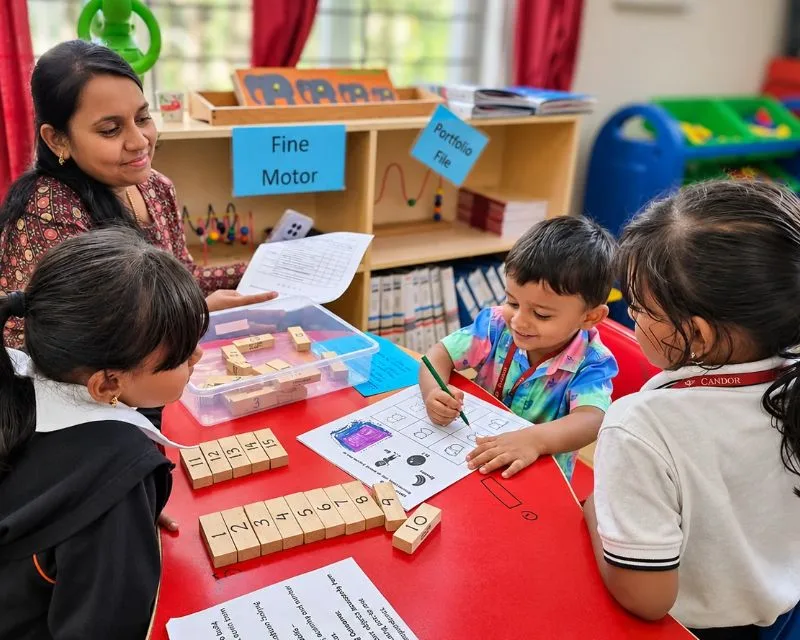
Counting, sorting, comparing, noticing patterns, exploring shape and space, measuring and solving everyday problems.
Social & emotional growth
Building friendships, recognising feelings, practising empathy, cooperating and navigating challenges.
Physical development
Strengthening coordination, balance, fine-motor control, body awareness and confidence through movement.
Independence & agency
Making choices, caring for belongings and shared spaces, taking responsibility and reflecting on learning.
Purposeful play
Learning is joyful. The thinking is real.
Play is thoughtfully planned and rich with possibility. It gives children meaningful reasons to wonder, communicate, investigate and solve problems. Educators observe closely, listen to children’s theories and introduce materials, questions and experiences that extend thinking.
Building a bridge can reveal balance, shape, measurement and cause and effect.
Creating a pretend shop brings together language, number, negotiation and collaboration.
Walking outdoors can prompt questions about living things, patterns, change and care for the environment.
Inquiry in the Early Years
Every experience can open a door to understanding.
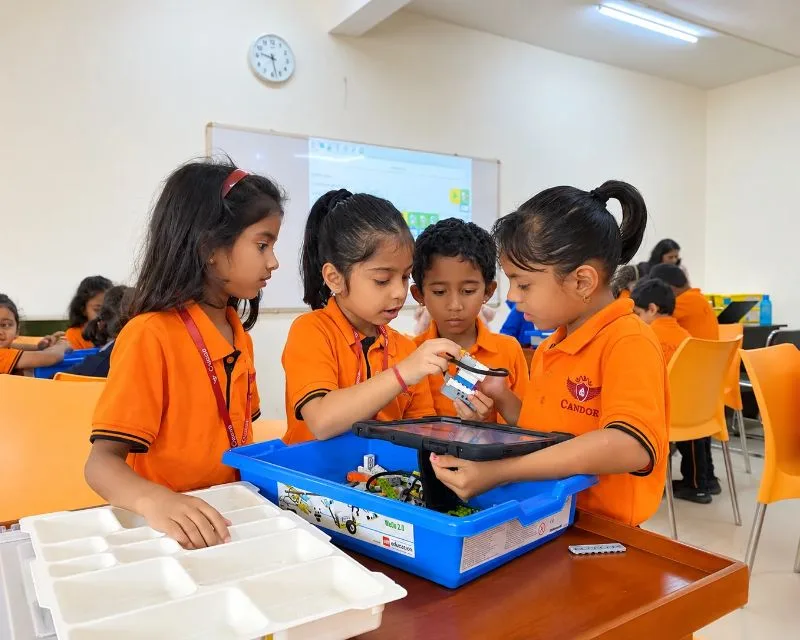
Children investigate ideas in different ways, often moving naturally between language, mathematics, science, creativity and social learning.
Build & design
Construct, test and rebuild
Children develop spatial awareness, early mathematical thinking, persistence and collaboration.
Imagine & role-play
Create stories and negotiate ideas
Children strengthen language, creativity, social understanding and their ability to see another perspective.
Explore & investigate
Observe, compare and experiment
Children ask questions, work with materials and build early scientific thinking and curiosity.
An environment that invites discovery
Welcoming spaces. Accessible possibilities.
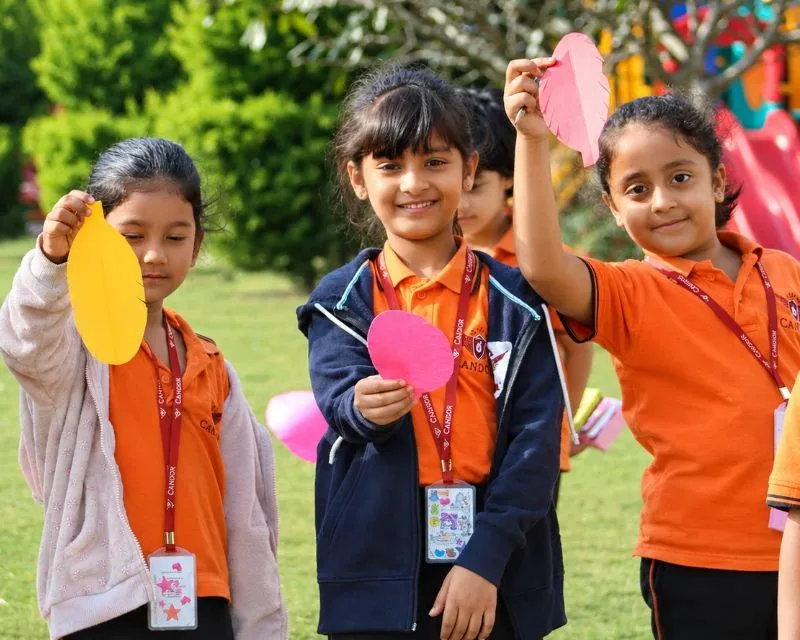
Carefully prepared environments and accessible resources invite children to make choices, follow interests and return to ideas in new ways.
- Indoor and outdoor experiences for building, creating and moving
- Open-ended materials that encourage imagination and investigation
- Connections with the natural and social world
- Children’s questions, creations and thinking made visible
- Spaces where every child feels valued within the learning community
The IB Primary Years Programme
Curious, connected young learners.
Candor’s Early Years is grounded in the IB Primary Years Programme, which values children as active participants in learning and recognises play as a powerful driver for inquiry.
IB Learner Profile
Children begin developing qualities such as being curious inquirers, thoughtful thinkers, caring community members, open-minded listeners and reflective learners.
These are nurtured through everyday choices, relationships and opportunities to contribute—not taught only as labels.
Approaches to Learning
Children gradually build transferable skills that help them learn with others and become increasingly independent.
- Communication skills
- Social skills
- Self-management skills
- Research skills
- Thinking skills
Educators who notice, listen and extend
Attentive observers. Intentional guides.
Our educators are more than providers of activities. They are co-inquirers who listen to children, notice emerging interests, document learning and decide what may deepen understanding next.
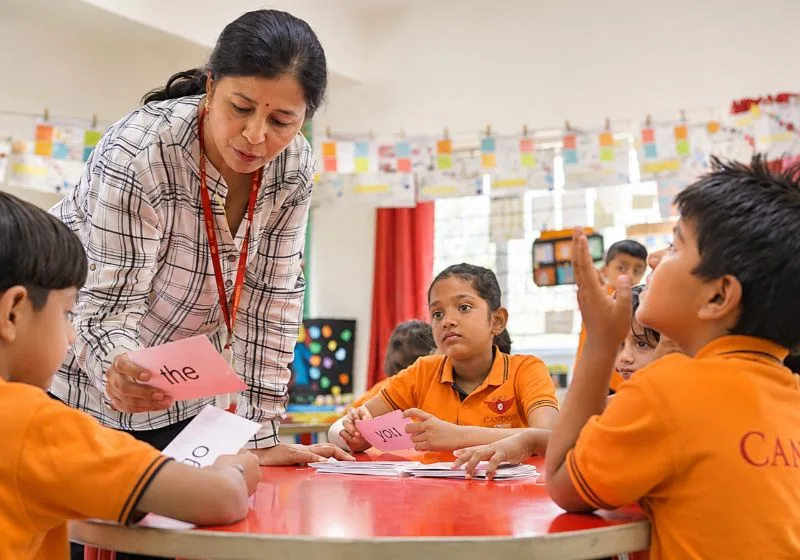
Observe children’s words, actions, relationships, questions and developing interests.
Take children’s theories seriously and invite them to explain, predict and reflect.
Introduce materials, experiences and questions with clear developmental purpose.
Balance support, challenge, choice and enough space for children to think independently.
Use evidence of learning to recognise growth and plan meaningful next steps.
Making learning visible
Progress lives in meaningful moments.
A child finding the words to explain an idea, persisting with a challenge, noticing a pattern, inviting a friend into play or choosing a new approach can all provide important evidence of growth.
Educators build a rich picture of each child’s development and use it to respond to individual needs and plan what comes next.
Families as partners
Home and school learning together.
Children’s learning is strengthened when home and school work in partnership. We value the knowledge families bring about their children—their interests, languages, experiences, strengths and ways of seeing the world.
Open communication and shared reflection create continuity, belonging and a stronger understanding of each child’s journey.
Ready for what comes next · Rooted in what matters now
Honouring childhood. Building strong foundations.
Children leave K2 confident, curious and ready for Grade 1. They have begun to see themselves as learners: curious enough to ask, confident enough to try, thoughtful enough to listen and resilient enough to begin again.
Frequently asked questions
What families want to know.
Which grades are included in Early Years?
Candor’s Early Years programme runs from Pre-K to K2 and prepares children to enter Grade 1 within the IB Primary Years Programme.
Does play-based learning include academic foundations?
Yes. Purposeful play develops early language, literacy, mathematical and scientific thinking while also strengthening social, emotional and physical development.
How do educators know children are progressing?
Progress is documented through observations, conversations, photographs, children’s creations and ongoing learning documentation rather than relying only on formal tasks.
How are individual needs supported?
Educators observe closely, adapt experiences, provide appropriate challenge and work with families to understand strengths, interests and developmental needs.
How does Early Years connect to Grade 1?
Children develop the communication, social, self-management, research and thinking skills that support increasing independence and a confident transition into Grade 1.
Discover Early Years at Candor
Make room for wonder. Nurture tomorrow’s possibilities.
Meet our Early Years team, explore the learning spaces and see how purposeful play helps young children develop confidence, curiosity and a love of learning.